Information updated: November 6, 2026
Introduction
The first two years of a child’s life are very important for their health and growth. A mother’s diet during pregnancy, proper care after birth, and the food a baby receives can have a big effect on their future health and development.
For low-income families, providing healthy food and regular medical care can be difficult. This is where the Benazir Nashonuma Programme can help.
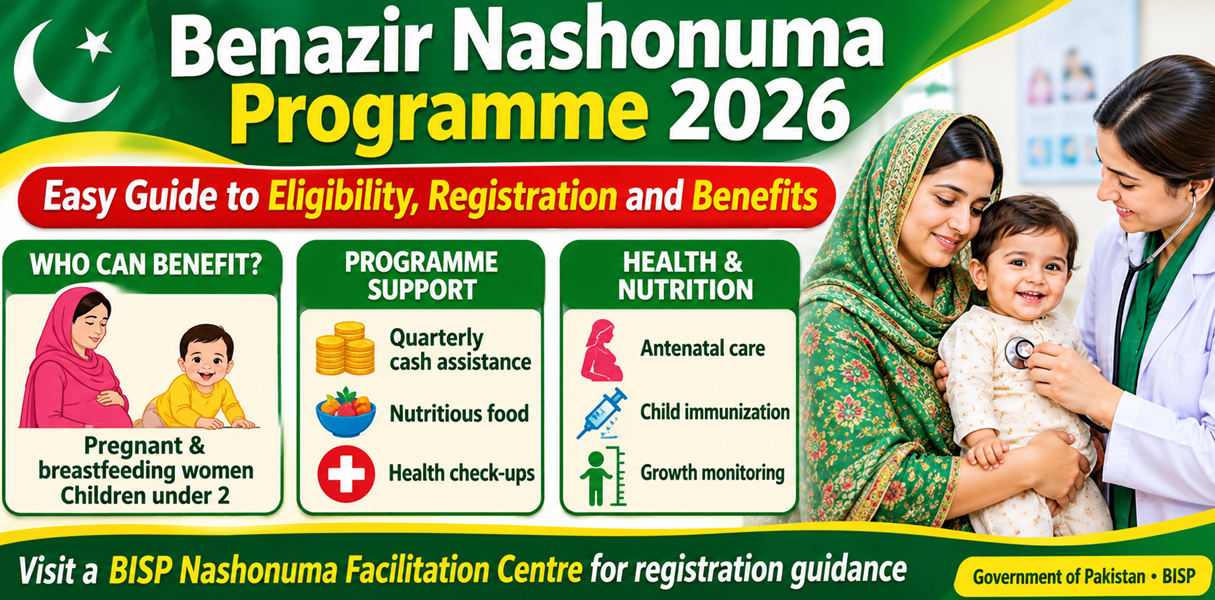
The Benazir Income Support Programme (BISP) runs the programme. It provides financial support, nutritious food, and health-related services to eligible pregnant women, breastfeeding mothers, and young children.
In this guide, we will explain who can get the programme, what benefits are available, and how to register step by step.
What Is the Benazir Nashonuma Programme?
Nashonuma means growth and development.
The programme focuses on the first 1,000 days of a child’s life. This period starts during pregnancy and continues until the child reaches two years of age.
The main purpose is to help mothers and young children get better nutrition and reduce problems such as malnutrition and stunted growth.
Nashonuma is also a conditional programme. This means beneficiaries need to follow certain health requirements, such as attending scheduled health visits and getting the child’s growth checked.
The Nashonuma payment is separate from the regular Benazir Kafaalat payment. Receiving Nashonuma does not mean that the Kafaalat payment will stop.
Why Is Nashonuma Important?
Many families struggle to afford nutritious food and regular healthcare for mothers and children. Nashonuma is designed to provide support during this important stage of life.
The programme aims to:
- Help pregnant and breastfeeding mothers improve their nutrition.
- Provide nutritious food to babies and young children.
- Encourage families to attend health checkups.
- Support child growth and development.
- Connect families with services such as vaccination and health awareness.
- Reduce some of the financial pressure on poor families.
BISP officials also visit Nashonuma centres to promote the programme and check how services are being provided.
Who Can Get the Programme?
The programme is mainly for women and children from eligible BISP families.
You may qualify if you are:
- A pregnant woman.
- A breastfeeding mother.
- A child between 6 and 23 months old.
- A woman who is already receiving Benazir Kafaalat.
- A person with the required identity documents.
The mother normally needs a valid NADRA CNIC, while the child needs a NADRA B-Form.
If you are unsure whether you qualify, you can first check your BISP/Kafaalat status through 8171.
What Benefits Do You Receive?
Eligible beneficiaries may receive different types of support through Nashonuma.
1. Cash Support
The programme provides a quarterly cash stipend to eligible beneficiaries.
Some published sources list amounts such as Rs. 2,500 per quarter for certain beneficiaries, while girls may receive a higher amount. However, payment rates can change, and different websites may show different figures.
For this reason, it is better to confirm the current payment amount with BISP or through 8171 before relying on a figure.
2. Nutritious Food
Eligible mothers and children can receive special nutritional food or supplementary food packets.
These foods are designed to provide additional nutrition during pregnancy, breastfeeding, and early childhood.
3. Health Support
The programme also connects beneficiaries with health services.
These may include:
- Regular health checkups
- Child growth monitoring
- Nutrition advice
- Health awareness
- Guidance about feeding and child care
- Support related to vaccinations
The Nashonuma payment is additional to Kafaalat, not a replacement for it.
How to Register for Nashonuma
Registration is generally done in person at a designated Nashonuma centre rather than through a normal online application.
Step 1: Check Your Kafaalat Status
First, make sure the mother is an active BISP Kafaalat beneficiary.
You can check your status by sending your CNIC number to 8171 or by using the official BISP 8171 portal.
Step 2: Prepare Your Documents
Take the required documents with you.
Usually, you should have:
- Mother’s original CNIC
- Child’s B-Form, if registering a child
- Any required pregnancy-related documents, if applicable
If you are pregnant and are not sure what proof is required, ask the Nashonuma centre before visiting.
Step 3: Find Your Nearest Nashonuma Centre
Nashonuma centres may be available at hospitals and other health facilities, including some THQ, DHQ, and Rural Health Centres.
You can ask your local BISP office or health facility about the nearest centre.
Step 4: Visit the Centre
Visit the centre with your documents.
The staff will check your identity and confirm whether you meet the programme requirements.
Step 5: Complete the Health Check
After registration, the mother or child may receive a health check.
The health staff may check things such as:
- Weight
- Growth
- Nutrition
- General health
The information is recorded as part of the programme.
Step 6: Receive Your Benefits
Once you are registered and approved, you may start receiving the applicable cash support and nutritious food according to the programme’s current rules.
The centre will also tell you when you need to return for your next visit.
Step 7: Keep Your Follow-Up Visits
Do not ignore your scheduled visits.
Regular visits are an important part of Nashonuma and help health workers monitor the mother’s and child’s health and growth.
How to Check Your Status or Get Help
If you have questions about your registration or payment, use official BISP channels.
You can:
- Send your CNIC to 8171 for status information.
- Use the official BISP 8171 portal.
- Visit your nearest BISP office.
- Visit your nearest Nashonuma centre.
- Ask health staff about your next visit or programme requirements.
If you find a helpline number on another website, check it against BISP’s official information before calling.
Helpful Tips for Beneficiaries
A few simple steps can make the process easier:
Register as Early as Possible
If you are pregnant, try to register early. The programme focuses on the important period from pregnancy through the child’s first two years.
Don’t Miss Your Health Visits
Your health visits are an important part of the programme. Keep track of your next appointment and try not to miss it.
Keep Your Documents Safe
Keep your CNIC and your child’s B-Form in a safe place. It is also useful to keep copies of important documents.
Follow the Health Advice
Health workers can provide useful advice about breastfeeding, feeding, hygiene, vaccinations, and child care.
Ask Questions
If you do not understand something about your payment, food package, or health visit, ask the staff at the Nashonuma centre.
Common Problems and What You Can Do
“My Name Is Not Showing in the System.”
First, check whether the mother’s Kafaalat status is active and whether her CNIC information is correct.
If there is still a problem, visit your local BISP office for help.
“The Nashonuma Centre Is Far Away.”
Ask your local BISP office or health department if another nearby health facility provides Nashonuma services.
“My Child Does Not Have a B-Form.”
You may need to obtain the child’s B-Form from NADRA before completing registration.
“The Payment Amount Is Different From What I Read Online.”
This is a common issue because old information can remain online.
Payment amounts and programme rules can change, so always confirm the latest amount through official BISP channels or 8171.
Be Careful of Scams
Whenever a government programme provides money or free support, scammers may try to take advantage of people.
Remember these simple rules:
- Do not pay anyone to register you.
- Use official BISP offices and recognised Nashonuma centres.
- Do not give your OTP or PIN to anyone.
- Do not enter your CNIC details on suspicious websites.
- Be careful of people who claim they can “guarantee” your registration or payment.
- Do not trust random social media posts or unofficial agents.
If someone asks you for money in exchange for Nashonuma registration or payment, be very careful.
Is the Programme Helpful?
The Benazir Nashonuma Programme can be helpful for families who struggle to afford nutritious food and regular healthcare.
It brings together financial support, nutrition and health monitoring during an important stage of a child’s life.
However, the programme cannot solve every problem related to child malnutrition. Clean drinking water, vaccinations, good healthcare, education and a stable family income are also important.
There can also be practical challenges, such as travelling long distances to a centre, availability of staff, or delays in receiving services.
For eligible families, the most important thing is to register through the proper channel and keep attending the required health visits.
Final Words
The Benazir Nashonuma Programme is designed to give mothers and young children extra support during one of the most important stages of life.
If you are a BISP Kafaalat beneficiary and you are pregnant, breastfeeding, or caring for a child under two, it is worth checking whether you qualify.
Start by checking your status through 8171 and contact your nearest Nashonuma centre for registration and current programme details.
If you know another eligible family, share this information with them. Sometimes, people miss out simply because they do not know the programme exists.
Important: Payment amounts, eligibility rules, centre locations and programme procedures can change. Always confirm the latest information through official BISP channels before making a decision.