Blog post · Information as of November 18, 2026
Introduction
Many young people in Balochistan finish school or college and then face the same hard question: where are the jobs? Government posts are limited, private opportunities are scarce, and a degree alone does not always lead to work. A practical skill, such as sewing, beauty services, embroidery, or a technical trade, can give a young person a way to earn without waiting for a job to appear.
That is the idea behind the Youth Vocational Skills Training Programme, which the Balochistan government has formally launched in Quetta. This guide explains in simple words what the programme is, who it is for, what is known about how it works, and what steps you can take to get started. It also says clearly what has not been published yet, so you are not misled.
What Is the Programme?
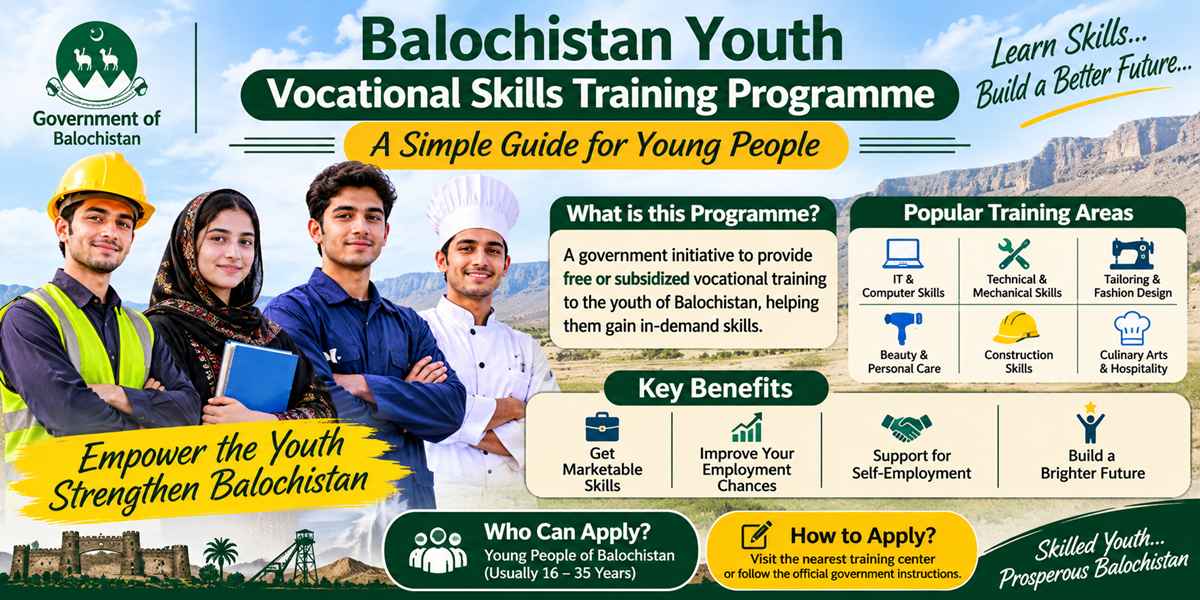
According to Dawn’s report of October 26, 2026, the programme was launched to give young people professional skills, reduce unemployment and promote economic self-reliance. It offers technical and vocational skills in line with modern industry requirements, so that participants can find a job or start their own small business.
The programme gives particular attention to women. Training is practical, meaning participants learn by doing rather than only listening to lectures.
Key Facts at a Glance
- Where: Quetta, for now.
- Who runs it: The Balochistan provincial government.
- Focus: Technical and vocational skills, especially for young women.
- Current enrolment: More than 240 female students are enrolled in courses such as beauty services, hand embroidery and other vocational skills.
- Target: The government aims to train more than 720 young people in Quetta under the programme.
- Goal after training: Employment or self-employment, including small businesses.
Why It Matters
Vocational training matters for a few simple reasons.
1. It leads to income faster. A short practical course can prepare a person for work in months rather than years.
2. It helps women earn. Skills like embroidery and beauty services can often be practised from home or in a small shop, which can make work possible for women who face travel or social limits.
3. It supports small businesses. A trained person can start a modest business, and a small business can in turn employ others.
4. It reduces dependence on scarce jobs. When government jobs are limited, skills give young people other options.
The Chief Minister has made a similar argument for other skills schemes, saying that training youth for work, including work abroad, is a practical response to unemployment.
Who Can Join?
This is where honesty matters. The news reports I found describe the programme’s goals and numbers but do not publish formal eligibility rules, such as age limits, education requirements or income conditions. So I cannot tell you an exact age range or list of documents.
What the reports do show is the intended audience:
- Young people in Quetta.
- Young women in particular.
- People who want to work or start a small business after training.
If you fit that description, you have a reasonable reason to enquire. Confirm the exact rules with the officials running the programme before you assume you qualify or do not.
What Will You Learn?
Reports name these fields so far:
- Beauty services
- Hand embroidery
- Other vocational skills (not listed in detail)
The full list of courses has not been published in the sources I found. Ask the training centre which courses are available, how long each one lasts, and whether it leads to a certificate.
Step-by-Step: How to Get Started
Since no public application form or portal has been announced in the reports, these steps are a practical way to find the right door rather than an official procedure.
Step 1: Decide what you want. Think about whether you want a job, a home-based job, or a small business. Ask yourself which skill people near you actually pay for.
Step 2: Gather your basic documents. Keep a copy of your CNIC or B-Form, passport-size photographs, and your latest education certificate or result. Most training programmes ask for such documents, but ask which ones are required.
Step 3: Find the right office. Start with the provincial bodies that handle technical training. The Balochistan Technical Education and Vocational Training Authority (B-TEVTA) is the provincial authority for technical and vocational education, and Quetta has government technical training centres. Ask at your nearest centre or district administration office which centres are running this programme.
Step 4: Ask these questions. Before registering, ask:
- Is registration open now, and is there a deadline?
- What are the age and education requirements?
- Which courses are available, and how long do they last?
- Is the training free?
- Is a stipend or certificate offered?
- What happens after training: job help, tools or business support?
Step 5: Register in person or through the official channel. Fill the form carefully, using the same name and CNIC details as on your documents. Take a receipt or note the name of the person who registered you.
Step 6: Attend regularly. Practical courses depend on attendance. Turn up on time and ask questions.
Step 7: Collect your certificate and plan your next move. Keep your certificate safe. Start work, apply for jobs or begin a small business as soon as you finish, while the skills are fresh.
Tips for Making the Most of the Training
- Practise at home. A skill grows with repetition, so keep practising outside class.
- Build a small portfolio. Photos of your work, such as embroidery or finished designs, help you win customers.
- Learn pricing. Ask your trainer how to price your work so you earn fairly.
- Use social media carefully. A simple page or WhatsApp business account can bring customers, but protect your privacy.
- Stay in touch with classmates. They can become partners, customers or a source of leads.
- Think of a team. Two or three trained women or men working together can take on larger orders.
Beware of Fraud:
When a government scheme is announced, scammers often appear. Protect yourself:
- Do not pay anyone to get you a seat, a certificate or a job placement. If a fee is ever charged officially, get a proper receipt from the institution itself.
- Verify the source. Confirm information with the official office, not only with a message forwarded on social media.
- Do not share your CNIC, OTP or banking details with strangers or on unofficial links.
- Be careful of “agents” who promise jobs abroad. Overseas employment promises should be checked with the provincial skills authority.
A Balanced Perspective:
Supporters see the programme as a practical step: it focuses on women, teaches skills with real market use and aims to create small businesses. These are all sensible goals. At the same time, a few fair questions remain. Reports so far describe the programme in Quetta, so people in other districts may wonder when it will reach them. The target of 720 trainees is modest compared with the province’s youth population. And as with any training scheme, the real test is whether graduates find work or customers afterwards, which will only be clear over time. For a young person, the best approach is to take the opportunity seriously while staying realistic.
Final Words:
The Youth Vocational Skills Training Programme is a small but sensible step towards helping young Balochistan residents, especially women, build skills and earn their own income. It is still in its early stage, and some details, such as eligibility rules and the application process, have not been publicly explained.
If you live in Quetta, do not wait for a perfect announcement. Pick the skill you want, collect your documents and visit your nearest technical training centre or the relevant government office to ask directly. If you are lucky enough to be accepted, take the course seriously, practise often and use it to build something of your own. And if you know someone, especially a young woman, who could benefit, share this guide with them.
Disclaimer:
This post is based on news reports available as of November 18, 2026. Eligibility rules, course lists, locations and application procedures can change and were not fully published at the time of writing. Always confirm current details with official Balochistan government offices.